
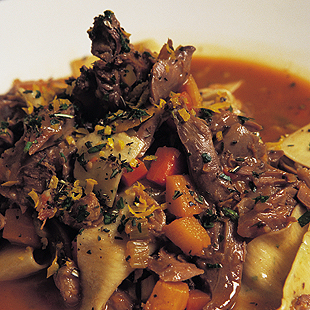
Lamb ragu with pappardelle pasta.
Photo by David N. Seelig
Plates of perfection
Winter pastas to warm the soul
by
Gregory Foley
Ah, winter! A blanket of snow quiets the landscape. A hot fire pops and crackles in the living room. And in the kitchen, wide ribbons of pappardelle pasta are boiling as scents of tomato, herbs and sautéed lamb permeate the air.
The image is real enough, although some might substitute scents of fresh cream, parmesan and pancetta.
Despite the fact that pasta was nurtured to culinary distinction in the sun-drenched hills of Italy, it is in many ways a perfect fit for cold, winter weather. It is filling, warming and can play as the perfect accompaniment to seemingly countless combinations of meats, seafoods, beans, vegetables and cheeses.
Pasta is immensely popular all over the world, largely because it is so versatile.
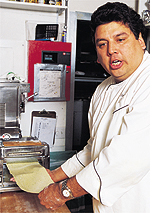 Keith
Otter, executive chef at Baci.
Photo by David N. Seelig
Keith
Otter, executive chef at Baci.
Photo by David N. Seelig
In summer, when most of us crave lighter foods, a variety of pastas can effectively be married with light broths, sauces and seasonal ingredients ideal for warm-weather dining. In winter, when hot, hearty foods are most appealing, the ingredients can easily be modified to produce classic dishes that at once please the palate and warm the soul.
“If you’re cold, you’re going to want something that gives you warmth and makes you feel good,” said Rosina Gangale, chef and proprietor of Rosina’s restaurant in Ketchum. “Pasta makes you feel good.”
Gangale, who hails from southern Italy, said winter is a season that generally calls for a more liberal use of rich ingredients, such as meats, sausages, cheeses and cream. As the ingredients change, pasta sauces might become thicker, with some being slow-cooked for lengthy periods of time.
Fresh fettuccine with a classic Bolognese sauce, a hearty blend of tomatoes and ground beef, can be an ideal lunch or dinner on cold days, Gangale said.
“The egg content in the fettuccine can help keep you warm,” she said. “In the winter time, it’s more about richer dishes that are more cooked.”
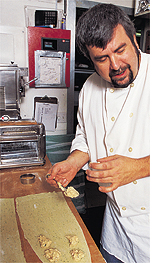 Brent
Rasmussen, chef de cuisine at Baci Italian Cafe, prepares Baci tomato-chevre
ravioli.
Photo by David N. Seelig
Brent
Rasmussen, chef de cuisine at Baci Italian Cafe, prepares Baci tomato-chevre
ravioli.
Photo by David N. Seelig
One of Gangale’s favorite winter pastas, she said, is Fettuccine al Papa Sisto, fresh fettuccine noodles blended with a creamy sauce that features smoked prosciutto ham, sausage and four types of cheeses.
“It’s definitely something you want if you’ve been skiing all day,” Gangale said.
Keith Otter, executive chef of Baci Italian Cafe in Ketchum, said pastas can be tailored to suit virtually any occasion, whether it is an impromptu après ski gathering or a special Valentine’s Day dinner.
“It’s just fun, simple food,” Otter said.
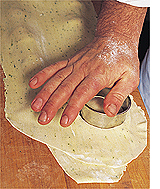 Brent
Rasmussen, chef de cuisine at Baci Italian Cafe, prepares Baci tomato-chevre
ravioli.
Photo by David N. Seelig
Brent
Rasmussen, chef de cuisine at Baci Italian Cafe, prepares Baci tomato-chevre
ravioli.
Photo by David N. Seelig
Otter, like Gangale, maintains that the best pasta dishes are coordinated with the seasons, using only fresh ingredients that produce an ample dose of three or four primary flavors that complement the firm, chewy texture of the noodles.
“What I think about any time I create a dish is what’s in the market,” Otter said. “You always want to use the freshest ingredients.”
Otter said winter pasta dishes often call for heavier, thicker types of pasta, such as pappardelle, fettuccine, lasagna and ravioli. Generally, he leans toward producing dishes with more substance, such as his Penne con Polpette Agnello, penne pasta tossed in a spicy tomato sauce with lamb meatballs.
However, Otter noted, good pasta dishes are not too heavy, even in the heart of winter.
“I don’t like to go
too rich and heavy, largely because I want to taste some pasta,” he
said.
Gangale concurred. “Italian food, done the right way, is light,” she
said.
Pasta comes in two basic forms: handmade fresh pasta, made with eggs, flour and water, and industrially made dried pastas, made with semolina (hard wheat flour) and water.
Many chefs—including Gangale and Otter—make fresh pasta for dishes that feature flat noodles, such as fettuccine, and pastas that are stuffed, such as ravioli. Dried pasta is often preferred for solid, shaped noodles, such as farfalle (bow ties), as well as hollow noodles, such as penne and rigatoni.
The key to preparing comforting pasta dishes for winter, whether using fresh or dried pasta, is ensuring that the key flavors do not compete for attention, Gangale said.
“If you are tasting garlic, there is too much of it in the dish,” she said. “It’s all about subtlety. Everything should go together.” •
Fettuccine al Papa
Sisto
From Chef Rosina
Gangale
1 lb. fresh
fettuccine
½ lb. Italian sausage
¼ lb. ground smoked prosciutto
2 oz. grated Gruyère cheese
2 oz. grated Mozzarella cheese
2 oz. grated Parmigiano cheese
2 oz. grated Fontina cheese
1 ½ cups cream
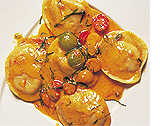 Fettuccine
al Papa Sisto.Photo by David N. Seelig
Fettuccine
al Papa Sisto.Photo by David N. Seelig
Sauté the sausage and
break it apart into small pieces while cooking. When almost cooked, add
smoked prosciutto and let the meats cook together for 5 minutes. Add the
cream. When the cream comes to a boil, add the cheeses.
Boil the pasta in salted water for 4 to 5 minutes. Drain and add to the
cream sauce. Mix together. Finish the dish by adding a dose of fresh,
cracked black pepper. Serve immediately.