
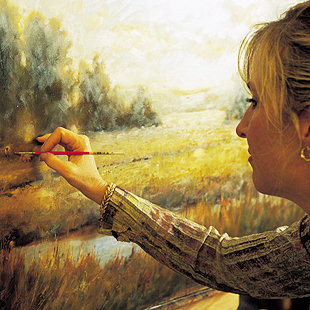
Photo by David N. Seelig
Bringing the world
a little serenity
The art of Lori McNee Watson
by
Megan Thomas
Like the sheep grazing on golden grass in her painting “Morning Meadow,” Lori McNee Watson’s art reflects the tranquil experience people stumble upon in the Wood River Valley.
“I feel like there is so much chaos in the world right now that I want to add some serenity to people’s lives,” Watson said.
The Sun Valley-based artist offers tranquility to others by delicately balancing man and nature through her brush strokes.
“I have an utter respect for nature and its creatures. I think it’s so important that we learn how to respect nature and live with it at the same time. I’m not trying to hit someone over the head with a big political message, but there is a little one there.”
Watson exudes a similar grace in her life as that evident in her work. Despite the recent national recognition swirling her work—an Editor’s Choice award in Wildlife Art magazine last summer, a profile in Southwest Art magazine in August 2003 and growing representation across the country—she manifests the art of balance: as an artist, a mother and a steward of nature.
Now embarking in a new direction, Watson concentrates on still life, landscape and plein air paintings. The compositions are strikingly different in nature, while capturing a tenuous equilibrium in a dramatic setting created through light and atmosphere.
"I have been at it for 20 years. I just switched gears over the past five years. I really started to focus on landscape and still life, that’s my passion,” she said.
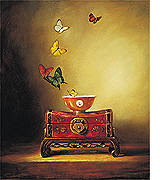 “Tibetan
Magic” by Lori McNee Watson
“Tibetan
Magic” by Lori McNee Watson
Watson’s recent direction moves away from a strict focus on wildlife art. Earlier in her career, she painted and illustrated for Ducks Unlimited, The Nature Conservancy and various trout and duck stamps.
“Every step of the way has really mattered. I wouldn’t be doing what I am doing if I had not learned to paint wildlife over the last years,” she remarked.
Watson began her study of art as a business student at San Diego State, where she enrolled in art classes on the side. Soon she altered her course of study and decided to pursue her passion.
As an art student she found an affinity for traditional styles rather than the contemporary focus of her classes. Watson embarked on a self-taught course of study, apprenticing with wildlife artists such as Carl Brenders, Robert Bateman and John Seerey-Lester. The artists continue to offer their support from a collection of personal photos resting in her studio.
“I can look at something and say, ‘Okay, I learned that from so and so.’ You don’t want to paint like someone; that’s never been my objective. I want to paint like me, but it’s a matter of trying to find yourself and piecing the puzzle together. And that just takes lots of painting miles.”
The puzzle is coming together for Watson. Over the last five years she has ventured into a new genre of looser landscape, plein air and still life works painted in oils that complement her wildlife paintings.
Watson stumbled into success three years ago after a friend took notice of her approximately 70 small paintings she completed as an artistic exercise. The friend offered to show the pieces at her Ketchum store, Revival Consignment. The show sold out, inspiring Watson to connect with the Kneeland Gallery in Ketchum, which currently shows her work.
“(Joining the gallery) wasn’t anything I planned or premeditated. I felt like I would not really be ready to get back into the gallery until my kids were grown.”
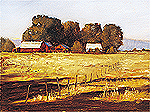 “Approaching
Shadows” by Lori McNee Watson
“Approaching
Shadows” by Lori McNee Watson
Watson paints with a new direction in composition and in a medium that meshes with her busy life as a mother, wife and outdoor enthusiast. She moved from acrylic to oil paints, which stay fresh for days. The subject matter and medium make it easier to juggle art and motherhood.
As a mother of three, she finds time to paint in between loads of laundry. Conveniently, Watson’s husband Rod built the family’s home customized with a studio for Lori to pursue painting. The home studio, along with the new genre of painting makes the balancing act easier.
“I have a lot of fun with still life. It fits into my lifestyle—I’m a busy mom,” she said.
The still life arrangements incorporate intricate vases, jars and pitchers overflowing with fresh bouquets. She balances the arrangement with a bird—most often a songbird—perched among the orchestration.
“Still life can be very boring. The birds add life,” she remarked.
Watson paints the birds from a scene housed on a permanent shelf her husband built, nestled near a high window. The shelf houses the arrangements, allowing her to paint still life scenes as her parenting schedule permits. Watson uses a clay model to capture the effect of the bird on the entirety of the composition.
“In the still life I am able to create my own universe,” her artist statement explains. “The arrangements are a juxtaposition of nature-made and man-made objects.”
The feathered friends complement the civilized world depicted by vessels: from Dutch Delft vases to oriental jars overflowing with brilliant flower arrangements. Since embarking into still life work, the vessels have worked their way into Watson’s personal life as well. A self-declared eBay addict, Watson now collects the vessels and decorates her paintings, home and studio with them. She houses her prized collection in a glass case, with a clear affection for Asian pieces.
“I have always admired Asian art,” she said. Pausing at her case, she pointed to a small figurine she received in the third-grade from a friend who visited China. She observed that she had never thought about the childhood connection of the treasured figurine to the Asian threads in her paintings.
The Asian themes come from an earlier period in her life, as do the songbird accents. As a child Watson lived in Scottsdale, Ariz., near an irrigated field that attracted birds. A neighbor she called “The Bird Lady” welcomed injured birds into her home to nurse them back to health. Watson spent many hours at the woman’s home as the creatures perched themselves atop teacups or next to fresh flowers.
With a child’s curiosity, Watson and her sister attempted to tame the birds. The two took an old wive’s tale to heart and sprinkled salt on the birds’ wings. The girls believed the salt would prevent the birds from flying. After they discovered the shortcoming of the story, Watson’s parents suggested she capture the beings on paper.
“When you’re trying to capture something that you can’t quite attain, there is a mystery. I think that added to my desire to draw birds and eventually capture them in paint,” she said.
The avian detail is the last element Watson adds to her still life works.
“It’s the cherry on top.”
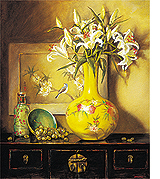 “Asian
Influences” by Lori McNee Watson
“Asian
Influences” by Lori McNee Watson
The birds metaphorically introduce the delicate equilibrium between the natural and civilized world in her still life works.
“The little beings have learned to live in our world. We need to learn to coexist.”
The fluidity of her philosophy unites her compositions that are often mistaken for those of different artists.
Her plein air and landscape paintings resonate with natural serenity and quiet. Using inspiration from local vistas, Watson captures familiar scenes through a warm atmospheric and tonal approach.
The plein air pieces take her outside to complete smaller works with coarse, quick brush strokes that capture the essence of a moment. She completes the entire painting on location.
“I’m a bit of a purist. Once I paint a painting outside I don’t like to touch it again because it loses the spark of the moment.”
The landscape paintings play off her experiences outdoors. Anchoring the paintings with shadows, she plays colors against each other for a dramatic, yet familiar effect. She incorporates pictures, personal photos and elements from her favorite places, like Adam’s Gulch and Trail Creek to recreate familiar Wood River Valley views.
The scenic views visually grasp the heart of the valley, an expression of balance between life and the environment. It’s a balance Watson maintains in her life and work with grace and a sense of optimism. •