| click here for the |
| front page |
| features |
| fire lookouts |
| flytying |
| beavers |
| craters of the moon |
| arts |
| peter woytuk |
| printmaking |
| handmade guitars |
| living |
| high desert gardens |
| pavers |
| summer fitness |
| recreation |
| skateboarding |
| danny thompson mem |
| galena |
| dining |
| salads |
| margaritas |
| calendar |
| summer 2003 |
| to-do |
| sun valley essentials |
| listings |
| galleries |
| dining |
| lodging |
| fitness |
| golf |
| equipment rentals |
| outfitters + guides |
| maps |
| ketchum street map |
| sun valley street map |
| local art galleries |
| Galena summer trails |
| fire lookouts: Idaho |
| fire lookouts: locator |
| the guide |
| last winter |
| advertising |
| about us |
| copyright |
| Copyright
© 2003 Express Publishing Inc. All Rights reserved. Reproduction in whole or in part in any form or medium without express written permission of Express Publishing Inc. is strictly prohibited. |
| Produced
& Maintained by Express Publishing, Box 1013, Ketchum, ID 83340-1013 208.726.0719 Voice 208.726.2329 Fax info@svguide.com |
| The
Sun Valley Guide is distributed free twice yearly to
residents and guests throughout the Sun Valley, Idaho resort area
communities.
Subscribers to the Idaho Mountain Express will receive the Sun Valley Guide inserted into the paid edition of the newspaper. |

A conversation
with
Judith Freeman
by Gregory
Foley
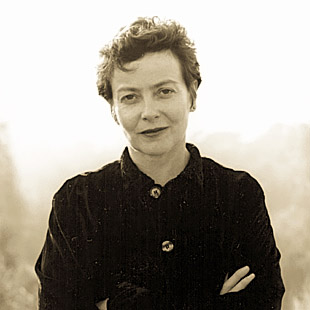
Author Judith Freeman, a part-time resident of central Idaho, is an anomaly in today’s fast-paced and polished literary world.
She is a self-taught writer who learned her craft from attentively reading the works of recognized masters such as D.H. Lawrence, Virginia Woolf and Willa Cather. She is a tireless devotee of the study and understanding of language: its force, function and potential for beauty. First and foremost, she is the consummate artist, one who eats, sleeps and breathes her self-appointed charge: to write stories that carry a true sense of purpose.
Freeman’s latest publication, “Red Water” (Pantheon), is a literary tour de force that blurs the lines between truth and fiction, good and evil, love and lust. “Red Water” is the story of the life of John D. Lee, a Mormon pioneer and polygamist who was executed for his part in the 1857 Mountain Meadows Massacre in southwestern Utah.
In the chronicled event, a group of 120 homesteaders en route to California was attacked and slaughtered by a band of Mormon settlers and their Native American allies. Only the lives of 17 young children were spared.
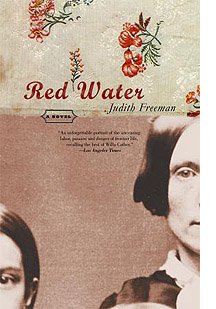 Told
in separate sections by three of Lee’s 19 wives, the novel artfully
blends history and fiction to reveal the women’s diverse perspectives on
the Mormon faith, the harsh Utah landscape, and the paradoxical man they
all shared in marriage.
Told
in separate sections by three of Lee’s 19 wives, the novel artfully
blends history and fiction to reveal the women’s diverse perspectives on
the Mormon faith, the harsh Utah landscape, and the paradoxical man they
all shared in marriage.
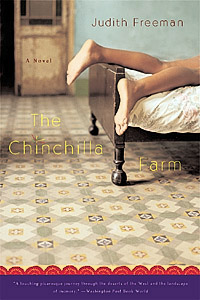
Published in hardcover in 2002, “Red Water” received broad critical acclaim. Anchor released the novel in paperback in April, the same month Freeman’s first novel, “The Chinchilla Farm” (1989), was re-released in a new paperback design by publisher W.W. Norton.
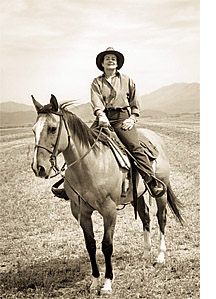
Freeman is the author of two additional novels, “Set for Life” and “A Desert of Pure Feeling,” as well as a collection of short stories, “Family Attractions.” She lives in California and Camas County, Idaho, with her husband, photographer Anthony Hernandez.
Freeman lived in Ketchum, from 1970 to 1978, before she moved to Los Angeles to pursue a writing career. From 1992 to 1995, she resided at a small ranch in Custer County, north of Stanley, and last year purchased a homestead property outside of Fairfield.
She recently spoke
with the Sun Valley Guide from her home in Los Angeles.
SVG—You choose to divide your time between California and Idaho?
What is your personal connection to Idaho and the Sun Valley area?
Freeman—I lived in Ketchum in the 1970s. On so many different levels, it was a fabulous place to be at that time. It was a very intimate place. In 1978, I moved out to Los Angeles. The Sun Valley Center for the Arts and the Ketchum arts scene was quite vigorous, but I knew I wanted to write, and felt that I really needed to be around people who were writing…
But I never forgot Idaho. I’ve always loved that landscape. It feels like inspiration to me. It’s the well that fills me up, and that well is nature. It’s really a wonderful thing for me to have roots in Idaho. To have the privacy and quiet.
SVG—You are a regular guest at the annual Sun Valley Writers’ Conference. Will you be attending the conference this summer?
JF—Yes, I will. I’ve been a regular attendee almost since the beginning. I love the Sun Valley Writers’ Conference, more than any other conference I’ve gone to. It’s not only for readers, but also for writers.
It’s a very intimate experience. It’s very easy to talk to great authors, people like Peter Matthiessen, and exchange thoughts and ideas. The conference has a wonderful atmosphere.
SVG— You are essentially a self-taught writer. How did you decide that you wanted to pursue a career in writing?
JF— I was raised in northern Utah, in Ogden. Though my family had many virtues, reading was not one of them.
I became a serious reader, a reader of literature, around the age of 19 or 20. I read works by authors like Virginia Woolf, Thomas Hardy and Willa Cather, and I thought, ‘This is what I want to do.’
Everything I learned about writing I learned from reading. I read passionately. But it took almost 20 years from when I first discovered literature to when I published my first book in 1987. In that time, I learned that to be a serious writer, you have to devote yourself to your work. My husband is an artist, and we have both chosen to give ourselves completely to our work.
SVG— “Red Water” is your first work of historical fiction. How did you first come to know about the Mountain Meadows Massacre and then decide to write a novel about it?
 JF—
My ancestors were Mormon colonists. In researching “Red Water,” the
names of my own ancestors kept cropping up. They were very devout people
who had a central role in the Mormon Church.
JF—
My ancestors were Mormon colonists. In researching “Red Water,” the
names of my own ancestors kept cropping up. They were very devout people
who had a central role in the Mormon Church.
But I decided to write the book for reasons that had nothing to do with my ancestors. I came across a copy of the book “The Mountain Meadows Massacre” by Juanita Brooks. I was stunned. I felt right then that this subject matter had claimed me, and I had to write a novel about it.
SVG— Since “Red Water” is your first historical fiction book, can you explain how the research and writing process differed from your other works?
JF— The novel took six years to research and write. For two or three years, all I did was read. I went to libraries, and with the help of several generous historians, I began to discover many, many rich documents. I gathered up an enormous amount of material. Then I had to face the challenge of how to use it.
From the very beginning, John D. Lee became the central figure that I began to focus on. He had a good side and an evil side. He was the perfect character, but I did not want to tell the story from his point of view. So I chose the three of his wives who were the most interesting to me.
I wanted to look at this man from several different points of view. I wanted to find the essence of the man, who was really an archetypal man of his time.
SVG— You were raised in a Mormon family. Do you believe your upbringing played a significant role in the writing of “Red Water?”
JF— I don’t think that anyone who wasn’t raised as a Mormon could have written this book.
The Mormon Church is
a rather secretive religion, and I really believe fiction is created in
the details.
I think I set out to create a tougher picture of Mormon life than the
one I grew up with, which was pretty disturbed and romanticized.
SVG— In “Red Water,” you do effectively what many authors cannot: successfully tell a story from several different points of view. How did you select your three narrators?
JF— I just wanted to tell a great story. Deciding how to tell the story is the great challenge. You have to decide who is going to lead you.
I had never before told a story from multiple points of view. It was very hard. I tried telling the story from a contemporary point of view, then realized this book had to be set entirely in the 19th Century, and discarded everything I’d written and started over. Then I wrote the novel with the three voices, Emma, Ann and Rachel.
Those three characters are absolutely essential ingredients.
 SVG—
The landscape plays such a prominent role in “Red Water.” Was that
inherent to the subject matter, or did you have a special feeling for
the West you were trying to convey?
SVG—
The landscape plays such a prominent role in “Red Water.” Was that
inherent to the subject matter, or did you have a special feeling for
the West you were trying to convey?
JF— The landscape of southern Utah is the other character in the novel. It is a wild, brutal, harsh landscape. And it is so red, so vibrantly colored. It is almost terrifyingly beautiful.
I wanted to examine how people would react to that landscape, especially the women.
SVG— What’s next for Judith Freeman? Are you working on a new writing project?
JF— Yes. I am. I’m working on a collection of stories and a novella about Esperanto, the artificial language developed in the 18th Century. Those who promoted it were trying to find a common language for all mankind…
There is so much strife in the world today—the national divisions, racial divisions —that I want to explore the idea of “hope.”