| Current Issue : web |
| Current Issue : PDF |
| features |
| Silver Creek Seasons |
| Land of No Return |
| Sawtooth Survival |
| A Coach's Calling |
| departments |
| Joe Fos |
| Idaho's Dixie Land |
| An Herbal Life |
| A Griffon's Tale |
| Chef's Specialty |
| Valley Interview |
| calendar |
| Fall 2006 |
| listings |
| Galleries |
| Dining |
| Lodging |
| maps |
| Dining Map |
| Gallery Map |
| the guide |
| Last Summer |
| Editorial Submission |
| Calendar Submission |
| Advertising Submission |
| Advertising Rates |
| About Us |

|
|
Copyright © 2006 Express Publishing Inc. All Rights reserved. Reproduction in whole or in part in any form or medium without express written permission of Express Publishing Inc. is strictly prohibited. The Sun Valley Guide magazine is distributed free three times a year to residents and guests throughout the Sun Valley, Idaho resort area communities. Subscribers to the Idaho Mountain Express newspaper will receive the Sun Valley Guide with their subscription. |

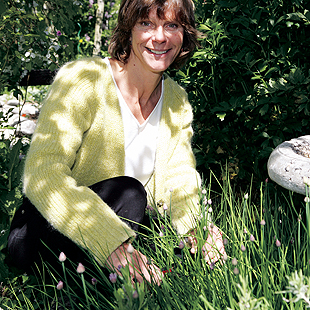
photo by Chris Pilaro
Cultivating an Herbal Life
From lavender to chamomile,
herbs flourish in the Wood River Valley.
Words by Dana DuGan. Photos by
Chris Pilaro.
If all things
sustainable, useful and evocative, few compare with herbs.
Used in everything from potpourri, eye pillows, salads, medicines, certain types of liquor and dyes, to paper, oils and even clothing, herbs touch many elements of life. They are so easy to grow that they are an obvious addition to all forms of gardens. For many, herbs are the best reason to garden at all.
Traditionally, herbs and plants have been the base of holistic cures and first aid. Calendula (marigold) is an effective healing remedy for the skin. Witch hazel is still widely in use as an astringent. St. John’s Wort is the happy herb, purportedly relieving anxiety and also useful for wounds. Aloe vera gel is a wonder cure taken directly from the plant for wounds, rash and burns and also as a drink that aids digestion. Arnica is used for sprains and bruises. Lavender oil is calming to the nerves, and nearly all herbs are dried for teas.
Although herbs are most familiar as teas and remedies, they are also used creatively in the home. Sachets of dried herbs or the latest trend, dream pillows filled with lavender, hops, mint and chamomile, can be attractive smelling additions to any household. Soap, shampoo, conditioner, body lotion, deodorant and laundry additives are also often made with herbs.
Hordes of handmade herbal gifts found at any farmers’ market or craft fair in the world attest to the popularity of natural herb products. However, there’s no need to wait for the next fair. Gardeners can easily add these useful plants to their yards or window boxes for year-round home use.
In the Wood River Valley, where the growing season is short, drought-tolerant herbs do especially well. These include thyme, sage, hyssop, lobelia, achillea, evening primrose, mullein, lady’s mantle, chervil, arnica, roman chamomile, fennel, chives, mint, oregano and certain lavenders.
Once established, these herbs need little water, tolerate lots of sun and don’t mind a dry climate as long as the soil is moderately fertile and drains well. Many can be brought indoors for the winter.
Annuals suggested for this region include borage, flax, German chamomile, basil, sweet marjoram, anise and dill. Parsley can actually hang on for as long as three years.
One resident who is an expert at putting hardy herbs to use is Cindy Hamlin. Her garden, tucked into a small canyon in the mid Wood River Valley, showcases large quantities of herbs she uses in her business, Twigs. Hamlin plants in the spring, harvests in the fall and spends the remainder of the season making gift products to sell at local arts-and-crafts fairs.
Her studio,
a cozy and shabby chic hideaway next to her home, is commodious and sunny.
Stacks of baskets—birdhouses in the making and many finished—hang from the
studio’s rafters, obscuring in places the beautiful paintings by her
sister, artist
Debbie Edgars Sturges.
“Gardening came first. I have an all-male family, so I had a need to find nice smells,” Hamlin laughed. When she discovered how well herbs grow in this area, Hamlin started researching how to turn these pretty plants into salable products. “The main herbs I use are lavender, thyme, sage and calendula. I love using rose geranium.”
From their bounty she produces such sweet-smelling products as hyssop-and-lavender-filled dream pillows, animal-shaped soaps, bath teas and scented pillows in vintage material. However, the process is not as simple as picking and stuffing a pillow.
First, Hamlin dries the plants over two weeks in a dry, dark place so as not to leach the color, scent or goodness of the herb, since she also uses the herbs’ essential oils for lotions and salve with olive and almond oils, beeswax and grapeseed. Everything is wrapped in cellophane, tied with lime- green satin ribbon holding a sprig of some delicious smelling herb.
“You need a big garden to grow them and a place to store jars,” Hamlin advises for those who may wish to follow in her footsteps. “My studio gets filled to the brim.”
One large-scale operation reveling in the current herbal renaissance is Valley View Lavender Farm in Buhl, south of the Wood River Valley. A journey to Valley View is like a jaunt through southern France. Russian olive trees line the narrow, hilly road leading to the farm as the overwhelming scent wafts from the hundreds of enormous lavender plants covering the surrounding hills.
Peggy Armstrong, owner with her husband, Al, is the farm’s head mixologist for new products. Al works up essential oil blends on a portable still. All those lavender plants provide the base for an incredibly diverse line of gift, beauty, cleaning and decorative products. Among the Armstrongs’ best-loved products are hand cream, laundry boosters and dryer sachets.
Valley View’s choice of lavender as a key ingredient in its products is an easy one, and one that is easy to grow at home. Its leaves, stems, buds and flowers all contain essential oils and all are valuable for different purposes. The plant can be used fresh, dry or in essential oil form. The essential oil is used in perfumes, potpourris, sachets, soaps, cosmetics, bath oils and massage oils. It is one of the only essential oils mild enough to apply directly to the skin without first diluting it in a carrier oil. It is an excellent air freshener when simmered on the back of a wood stove. A sachet tucked into a pillow eases one to sleep. Tuck one between the sheets in the linen closet or in the clothes drawer. Keep one in the car. Lavender holds its fragrance for years. Burn the stems as incense. Add drops to the final rinse for hair. Add sprigs to wreaths or nosegays. In the language of flowers, lavender represents ardent attachment, devotion, success and luck.
 Medicinally, lavender is said to have soothing properties that relieve
stress and help with sleep. A few drops of oil in a warm bath or rubbed on
the temples soothes the nerves and alleviates headache. Fill a mask with
lavender and put it over the eyes for relaxing. Use it in salves as an
analgesic for bug bites to relieve itching and reduce swelling and for
mild burns. Mix a few drops in water to spray on sunburn. Lavender is but
one of the many herbs useful around the house and appreciated as a gift.
Medicinally, lavender is said to have soothing properties that relieve
stress and help with sleep. A few drops of oil in a warm bath or rubbed on
the temples soothes the nerves and alleviates headache. Fill a mask with
lavender and put it over the eyes for relaxing. Use it in salves as an
analgesic for bug bites to relieve itching and reduce swelling and for
mild burns. Mix a few drops in water to spray on sunburn. Lavender is but
one of the many herbs useful around the house and appreciated as a gift.
With much to learn about each herb and its potential uses, the time to begin researching and planning for spring is now. For those gardeners with herbs already blossoming, now is the time to harvest them in an effort to keep the delicious essence of herbs wafting through a home closed tight against the cold of winter.
Harvesting herbs
One of the keys to great herbal decorations and gifts is making them in a
timely fashion, before the plants go into winter hibernation.
Cut herbs when they’re green and fragrant, and remember, the more they are trimmed the more healthy re-growth is promoted. Good air circulation is vital when drying herbs, whether on a flat frame or hanging in bunches.
The best
way to harvest lavender depends on what you need it for. For a fresh
bouquet, pick with half-opened blossom heads. To dry the bundle for
crafting or sachet, pick when more than half the blossoms are open. In the
fall, cut the green of the lavender back so about one or two inches of
green remains to promote fuller growth for the next season. Don’t cut into
the wood.
Herbal recipes
Bath Tea: These tea bags can be thrown directly into the bath
water. Combine calendula flowers, lavender, sage, rose petals, organic
oatmeal, Epsom salt and essential oil. Place inside muslin or organza
fabric sewn with matching thread. Finish with a ribbon.
Calendula Salve: Melt together 2 ounces of beeswax and 1.5 cups of olive oil in a heavy pan. Add a handful of calendula flowers. Simmer for 10 minutes and strain through cheesecloth. Pour mixture into jars and allow to cool before sealing. Ointment can be used to soothe and heal minor burns and cuts, as well as soften rough skin.
Herbal Vinegar: Take 4 cups of red wine vinegar, 8 sprigs of fresh parsley, a sprig of thyme, rosemary, sage leaves. Wash herbs thoroughly. Rinse under cool, running water and pat dry. Place herbs in clean quart jar. Heat vinegar but don’t boil and pour over herbs. Allow to stand in a cool, dark place for four weeks, shaking occasionally. Strain out herbs. Pour vinegar into clean bottles with tight-fitting covers. Store in the refrigerator. Create your own labels to put on the bottles and give as presents.