| Current Issue |
| features |
| Hemingway's autumns |
| The Aspen Tree |
| Rocky Mountain Elk |
| Kevin Syms |
| Rember's 'Traplines' |
| Views and Windows |
| Mountain Weather |
| Idaho Trout |
| calendar |
| Fall 2005 |
| listings |
| Galleries |
| Dining |
| Lodging |
| maps |
| Gallery Map |
| the guide |
| Last Summer |
| Advertising |
| About Us |
|
Copyright
© 2005 Express Publishing Inc. All Rights reserved. Reproduction in whole or in part in any form or medium without express written permission of Express Publishing Inc. is strictly prohibited. The Sun Valley Guide magazine is distributed free twice yearly to residents and guests throughout the Sun Valley, Idaho resort area communities. Subscribers to the Idaho Mountain Express newspaper will receive the Sun Valley Guide with their subscription. |

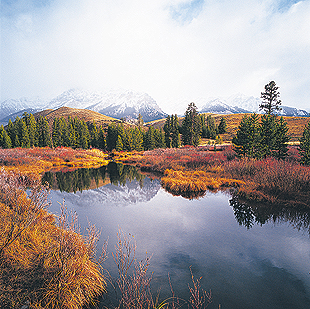
Photo by Kirk Anderson
Mountain weather:
be prepared
By
Paul Potters
Ah, it’s fall in the Rockies again. Many will tell you autumn is the best time of year. The summer hordes have gone home, leaving the mountains tranquil. That, combined with golden aspen groves against azure blue skies and cool mornings with warm afternoons, makes up ideal weather for any outdoors adventure.
Before heading out on that perfect day hike, mountain bike ride or hunting trip, make a few preparations.
Although here in Sun Valley we often experience weeks of perfect weather, fall’s storms arrive unexpectedly, bringing snow, a chilling rain or both.
I remember a trip into the Sawtooths, just after Labor Day, where we experienced everything from summer-like temperatures to bone-chilling wind and cold—all over a three-day weekend.
•
Our retreat down Redfish canyon more closely resembled Napoleon’s retreat from Moscow than the return from a casual weekend outing. Fortunately, we were all prepared with proper clothing and appropriate gear and enjoyed the entire trip.
Therein lies the point: The preparations you make before you leave home can make the difference between a safe, enjoyable trip versus the trip from hell.
Start with a visit to the Internet. A good site to visit is www.noaa.gov. Here you’ll find up-to-date weather information as well as satellite imagery and long-range forecasts. Depending upon the weather, you can choose an appropriate route. If you don’t have Internet access, The Weather Channel is your next bet.
Because of the extreme temperature changes we experience here, you’ll want to pack some warm clothing, like a fleece jacket, some lightweight polypropylene long underwear, a rain jacket and pants, and a warm hat and gloves.
You’d also be wise to pack an emergency kit just in case. I like to bring along a space blanket, a headlamp, an extra energy bar, a first aid kit and a fire kit. My fire kit can be as simple as a Bic lighter or waterproof matches and some fat wood. With these simple items you would be prepared to handle just about any adverse conditions you might encounter, from the unexpected storm to an unplanned night out.
Also in your pack should be a map and compass, your guidebook and a cell phone. (Beware: cell service in this area is spotty.)
All this may seem like a lot, but with the advances in modern fabrics, you’d be amazed how light and compact it all is. The thing to remember is that mountain weather is fickle and being prepared can mean the difference between a great adventure and tragedy. •